

Ohi Day: The History Behind Greece’s National Holiday on 28 October
Introduction: Why Is 28 October So Important in Greece?
Every year on 28 October, Greece celebrates one of the most important days in its modern history: Ohi Day (Όχι), also known as Oxi Day, or the “Day of No.”
On this day, Greeks commemorate the refusal of their country to surrender to the demands of Fascist Italy in 1940, during the Second World War. What followed was an Italian invasion, a determined Greek resistance, and a struggle that became one of the most celebrated episodes in modern Greek history.
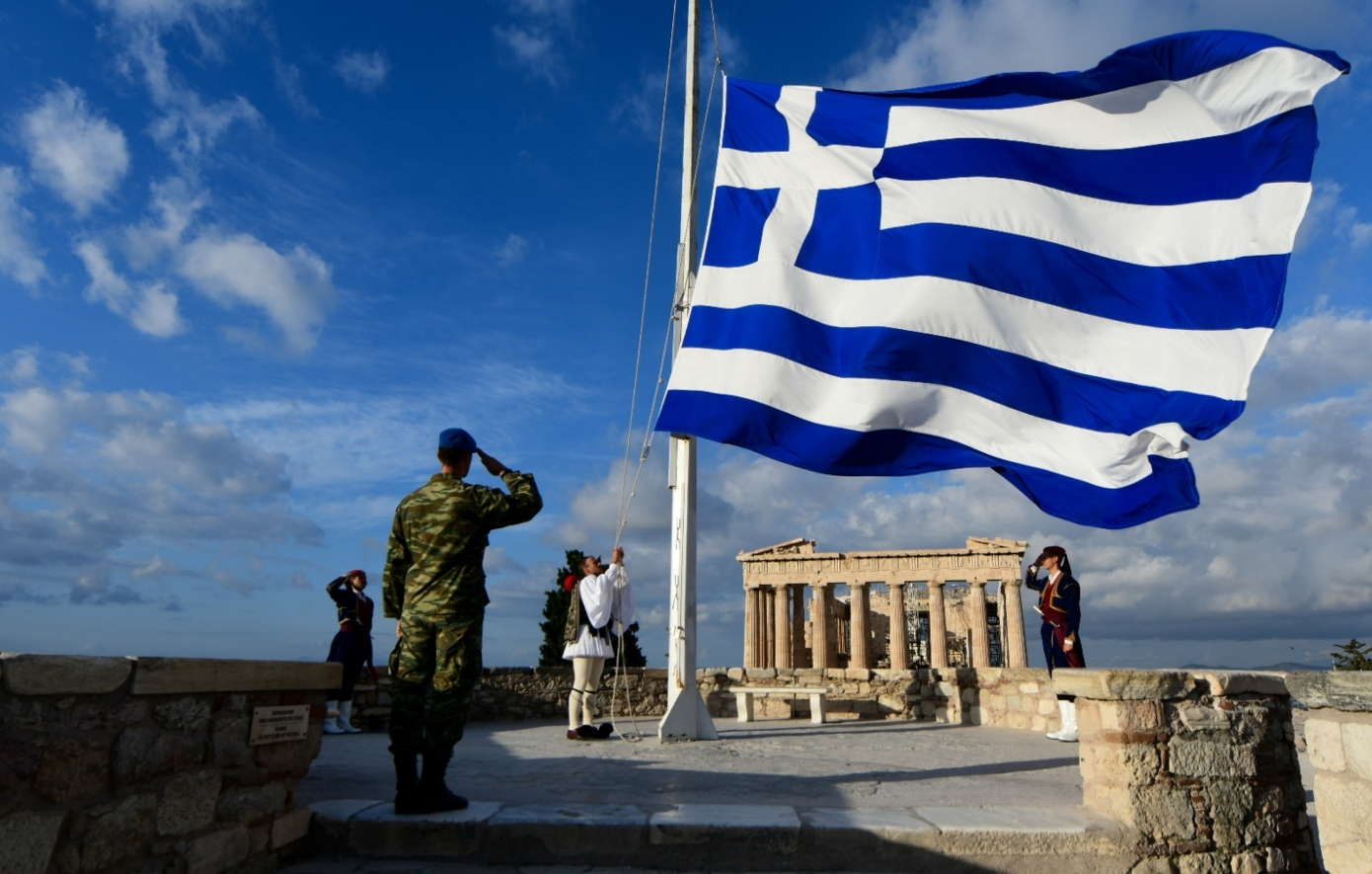
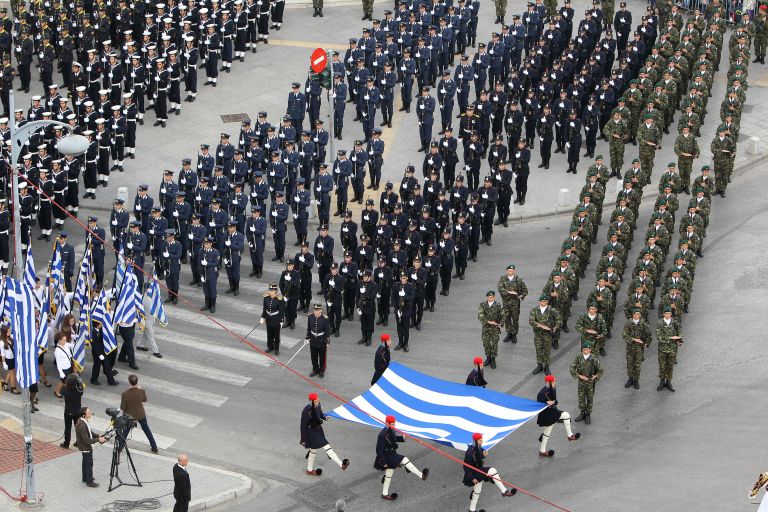
Across Greece, the anniversary is marked by school and military parades, Greek flags displayed on balconies and streets, patriotic songs, and ceremonies honouring those who fought and died for their country.
But Ohi Day is more than a military anniversary. It represents the defence of freedom, national independence, dignity, and the determination of a people to resist foreign domination.
To understand why Greeks continue to celebrate 28 October, we must return to Europe in 1940, when fascism was spreading across the continent and the Second World War was already reshaping the world.
1. Europe Before the War: The Rise of Fascism
During the 1930s, Europe experienced a period of growing political tension, military expansion, and authoritarian rule.
In Italy, Benito Mussolini had established a Fascist dictatorship. His government promoted nationalism, militarism, and the expansion of Italian power across the Mediterranean and the Balkans. Mussolini dreamed of building a new Italian empire inspired by the glory of ancient Rome.
In Germany, Adolf Hitler and the Nazi regime were pursuing their own expansionist ambitions. By 1940, Nazi Germany had conquered several European countries, while France had fallen and Britain was continuing its fight against Germany.
Italy had invaded Ethiopia in 1935 and Albania in April 1939. Albania subsequently became an important base for Italian ambitions in the Balkans.
Greece, meanwhile, was governed by Ioannis Metaxas, who had established an authoritarian regime in 1936. Although Metaxas admired certain aspects of authoritarian government, Greece was not a member of the Axis alliance, and its strategic interests increasingly conflicted with Italian expansionism.
The Greek government attempted to maintain neutrality and avoid entering the war. However, neutrality could not protect the country indefinitely from Mussolini’s ambitions.
By the autumn of 1940, the threat of an Italian attack had become increasingly clear.

2. The Incident That Increased Tensions: The Sinking of the Elli
One of the most significant incidents before the invasion took place on 15 August 1940, during the celebration of the Orthodox Christian feast of the Dormition of the Virgin Mary.
A Greek light cruiser named Elli was anchored in the harbour of Tinos, where thousands of Greek pilgrims had gathered for the religious celebration.
The ship was struck by a torpedo fired by an Italian submarine. One crew member was killed, and others were injured. Although Italy did not officially accept responsibility at the time, the attack was attributed to Italian forces.
The sinking of the Elli shocked Greek public opinion. It was widely regarded as a deliberate provocation and a warning of Italy’s intentions towards Greece.
The Greek government sought to avoid an immediate escalation, but the incident deepened the country’s distrust of Mussolini’s regime.
Behind the scenes, Italy was preparing for a much larger military operation.
3. The Italian Ultimatum: The Early Morning of 28 October 1940
In the early hours of Monday, 28 October 1940, at approximately 3 a.m., the Italian ambassador to Greece, Emanuele Grazzi, arrived at the residence of Ioannis Metaxas in Kifisia, near Athens.
He delivered an ultimatum from Mussolini’s government.
Italy demanded that Greece allow Italian troops to enter Greek territory and occupy strategic locations. In practice, accepting these demands would have meant allowing a foreign power to violate Greece’s sovereignty and potentially occupy important parts of the country.
Metaxas had only a few hours to respond.
According to the historical account, Metaxas replied in French:
“Alors, c’est la guerre.”
In English, this means: “Then, it is war.”
The phrase expressed his refusal to accept Italy’s demands. The ultimatum was rejected, and Italian forces invaded Greece before the deadline had expired.
The word Ohi (Όχι), meaning “No” in Greek, became the defining symbol of this decision.
Although the famous response is traditionally associated with Metaxas, the significance of Ohi Day extends beyond one man. It represents the resistance of the Greek people as a whole.
At the time, Greece was ruled by a dictator, and its population did not enjoy full democratic freedoms. Yet, when the country faced invasion, a broad national movement of resistance emerged.
The anniversary therefore commemorates the decision to resist foreign aggression, rather than celebrating Metaxas’s domestic political regime.
4. The Italian Invasion and the Greek Response
On the morning of 28 October 1940, Italian troops invaded Greece from Albania, which Italy had occupied the previous year.
The main fighting took place in the regions of Epirus and the Pindus mountain range in northwestern Greece. Italian forces expected to advance rapidly, believing that Greece would be unable to withstand their military strength.
However, the invasion encountered fierce resistance.
Greek soldiers faced difficult terrain, freezing temperatures, heavy rain, and serious supply challenges. The mountainous landscape made military operations particularly demanding, but it also provided opportunities for the defenders to resist the advancing Italian troops.
Greek forces fought to protect their territory and prevent the Italian army from advancing towards the country’s interior.
The population also mobilised to support the war effort. Reservists were called to the front, while women and civilians contributed by providing supplies, transporting materials, and assisting the military wherever possible.
The atmosphere of the first days of the war was one of anxiety, determination, and national mobilisation.
The Greek army did not simply attempt to survive the invasion. It eventually launched a counteroffensive that pushed Italian forces back into Albania.
5. The Greek Counteroffensive: An Unexpected Turn in the War
One of the most remarkable aspects of the Greco-Italian War was that Greece managed to reverse the direction of the Italian offensive.
By November 1940, Greek forces had begun pushing the invaders back across the border. They subsequently advanced into areas of Italian-controlled Albania.
Greek troops captured important towns and strategic positions, demonstrating that Italy’s expectations of an easy victory had been badly mistaken.
The victories were particularly significant because Italy possessed a larger military and greater resources than Greece.
Nevertheless, numbers alone did not determine the outcome. Greek military planning, the effective use of the terrain, the determination of the troops, and weaknesses in the Italian campaign all contributed to the Greek success.
The victories raised morale throughout Greece and attracted international attention. Britain and other opponents of the Axis powers welcomed the Greek resistance as an encouraging development at a time when much of Europe was under German or Italian domination.
The Greek campaign became a powerful symbol of resistance against fascist expansion.
However, the war came at a terrible cost. Soldiers suffered from combat, exposure, shortages, and disease, while civilians experienced fear and uncertainty as the conflict continued.
The Greek successes against Italy would not bring an immediate end to the country’s suffering.
6. Why Did Germany Invade Greece?
The failure of the Italian campaign created a serious problem for the Axis powers.
In April 1941, Nazi Germany intervened militarily in the Balkans. German forces invaded Greece on 6 April 1941, while also attacking Yugoslavia.
Despite strong resistance at several locations, the Greek and Allied forces could not prevent the German advance. Athens fell later that month, and German forces entered the city on 27 April 1941.
Crete continued to resist until the German airborne invasion in May 1941, after which the island also came under Axis occupation.
Greece was subsequently divided among German, Italian, and Bulgarian occupation authorities.
The occupation brought some of the darkest years in modern Greek history.
7. The Occupation: Famine, Repression, and Resistance
The occupation of Greece between 1941 and 1944 caused enormous suffering.
Food shortages and the collapse of supply systems contributed to a devastating famine, particularly during the winter of 1941–1942. Thousands of people died, especially in urban areas such as Athens and Piraeus.
The occupying powers imposed harsh restrictions, carried out executions, destroyed villages, and persecuted civilians. Jewish communities in Greece suffered terribly under Nazi persecution, with the vast majority of Greece’s pre-war Jewish population murdered during the Holocaust.
Yet resistance did not disappear.
Greek resistance movements organised sabotage operations, gathered intelligence, and fought against the occupying forces. Civilians supported resistance networks despite the danger of imprisonment, torture, execution, and reprisals against entire communities.
One of the most important symbolic acts of resistance occurred in May 1941, when Manolis Glezos and Apostolos Santas removed the Nazi flag from the Acropolis in Athens.
Their action became an enduring symbol of opposition to the occupation.
The resistance took many forms, from armed struggle in the mountains to underground political activity, assistance to persecuted people, and efforts to preserve national identity.
Greece was liberated in October 1944, although parts of the country experienced continued fighting and the country soon descended into a devastating civil war.
The experience of the war and occupation left deep scars on Greek society.
8. How Did 28 October Become a National Holiday?
The anniversary of 28 October gradually became an important occasion for public commemoration.
The first anniversary in 1941 was marked under Axis occupation, when public celebrations were restricted and demonstrations of Greek national feeling carried considerable risk.
After liberation, the anniversary developed into a major national commemoration. Over time, it became established as an official public holiday.
Today, Ohi Day is observed every year on 28 October throughout Greece and by Greek communities abroad.
It is a day for remembering the decision to resist the Italian ultimatum, honouring those who fought in the war, and reflecting on the value of national independence.
The date is also an opportunity to teach younger generations about the Second World War and the consequences of dictatorship, aggression, and occupation.
9. How Do Greeks Celebrate Ohi Day Today?
Ohi Day is celebrated throughout Greece with ceremonies and public events.
School parades
Students march through towns and cities, often wearing school uniforms or traditional Greek costumes. They carry Greek flags and represent the younger generations who are learning about the country’s history.
Military parades
Military personnel and representatives of the armed forces participate in commemorative parades. These events honour the soldiers who defended Greece in 1940 and those who lost their lives in the war.
Flag displays
Greek flags appear on balconies, public buildings, schools, and streets. The blue and white colours become a particularly visible symbol of national remembrance.
Memorial ceremonies
Officials, veterans, students, and local communities attend ceremonies and lay wreaths at monuments dedicated to the fallen.
Events in Greek communities abroad
Greek communities in countries around the world also organise church services, school events, and parades. These celebrations allow people of Greek heritage to maintain a connection with their history and cultural identity.
For many families, the day is also an opportunity to discuss the experiences of parents, grandparents, and other relatives who lived through the war or the occupation.
10. What Does Ohi Day Mean to Greeks Today?
The importance of Ohi Day goes beyond the events of 1940.
At its heart, the holiday represents the idea that a country’s independence and dignity should not be surrendered without resistance to aggression and coercion.
The word Ohi has become a powerful symbol in Greek national consciousness. It represents the refusal to accept demands that threaten freedom, sovereignty, and the right of a people to determine their own future.
The anniversary also carries a message about collective responsibility. Although Metaxas delivered the response to the Italian ultimatum, the subsequent war required the participation, sacrifice, and endurance of soldiers and civilians across Greek society.
Remembering the anniversary therefore means remembering not only a political decision but also the people who lived through its consequences.
It is equally important to understand the historical context honestly. Greece’s resistance took place under an authoritarian government, and the country’s later suffering included the brutality of occupation, the Holocaust, and internal conflict. Commemorating the courage of those who resisted the invasion does not require overlooking these complexities.
Instead, the history of Ohi Day can serve as a reminder of the importance of freedom, democracy, human dignity, and peace.
Conclusion: A Defining Moment in Greek History
On 28 October 1940, Greece faced a decision that would shape its modern history. The Italian ultimatum demanded that the country accept foreign military intervention and surrender control over its territory.
The refusal became known as Ohi, or “No.”
What followed was a determined military resistance that surprised the world, a Greek counteroffensive against Italian forces, and eventually a German invasion that led to years of occupation and suffering.
The courage shown by Greek soldiers and civilians became an enduring part of the country’s historical memory.
Every year, when Greek flags are raised and students march through the streets, the anniversary recalls a moment when Greece refused to surrender its independence without a fight.
Ohi Day is not simply a celebration of a victory. It is a day of remembrance for those who sacrificed their lives, a recognition of the suffering endured during the war, and a reminder that freedom and peace should never be taken for granted.
For Greece, 28 October will always be the day that a single word — Ohi, “No” — came to symbolise a nation’s determination to defend its freedom.